Best Family Hikes Near Cortina
A field-tested guide to best family hikes near cortina, with honest logistics, current planning advice, and the small details that make a Dolomites trip run smoothly.
Reviewed by the Cortina Compass desk
Last verified on foot: June 2026 How we research
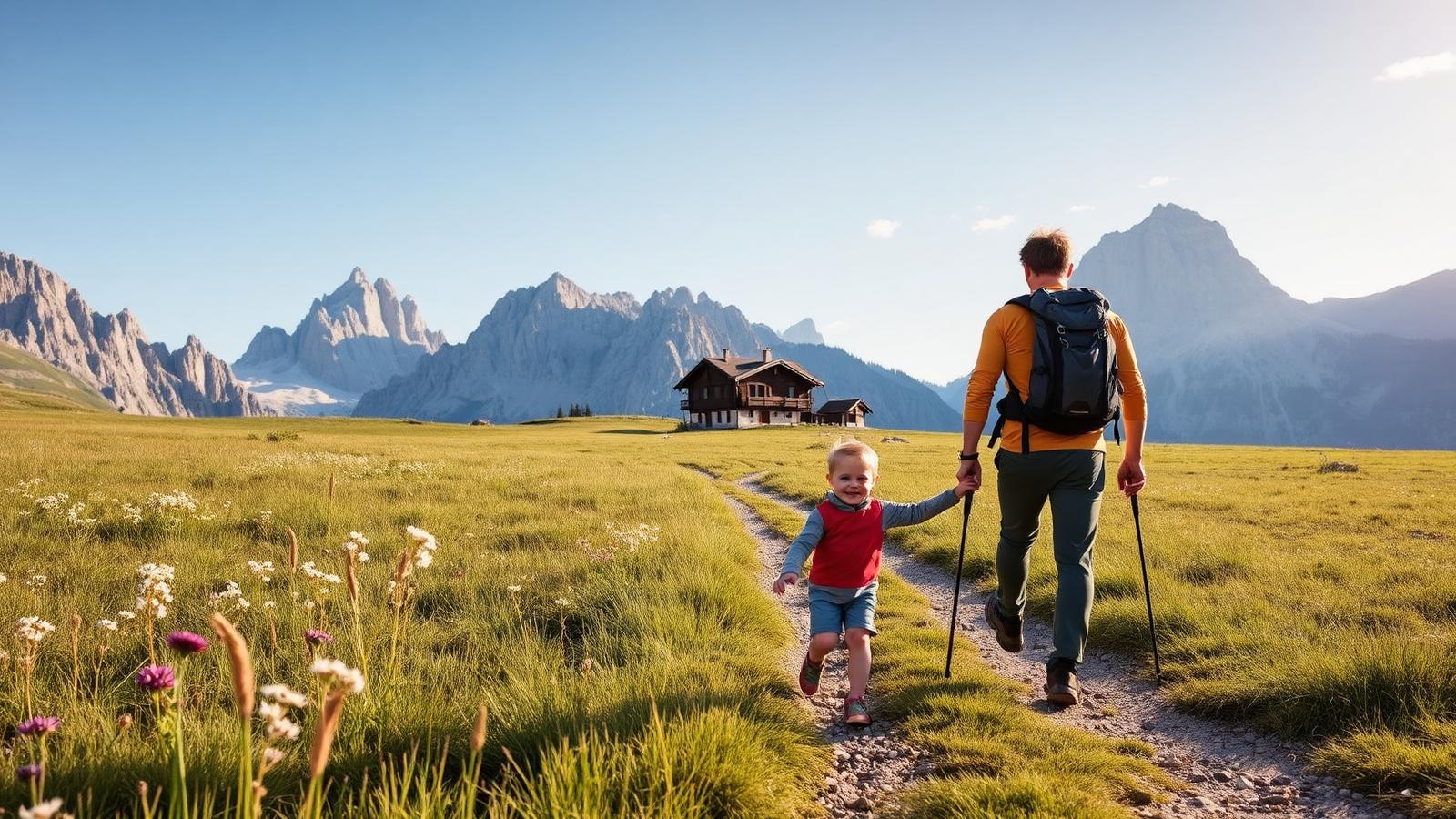
Walking with children in the Dolomites works when the day has something in it for them other than scenery — a hut with cake, a lake to throw stones into, a chairlift, marmots. Distance is negotiable. Boredom is not.
What makes a walk work with kids
The single biggest factor isn't difficulty, it's structure. A walk with a clear destination that children can see or imagine — a hut, a lake, a cable car station — goes far better than a longer, prettier route with a vague endpoint. Marmot colonies and cows count as destinations too.
The second factor is a bail-out. If the route has a lift or a bus at the far end, you can commit to going one way without worrying about a meltdown on the return leg.
The anchors that keep small legs walking
Ra Stua river meadow
Shallow water for splashing plus free-range horses that graze right up to the path.
Prato Piazza panorama loop
A flat 4km circuit with Cristallo and Croda Rossa visible the entire way.
Cinque Torri chairlift trenches
Turns a walk into a fort-exploring game most children don't want to leave.
Rifugio Scoiattoli terrace
Half portions on request and a view of the towers that kids actually point at.
Realistic distances by age
Rough guide from what I've seen work: four- to six-year-olds manage two to three kilometres with a hut at the end; seven to nine can do five or six kilometres and 200 metres of climbing; ten and up can do a proper mountain day if they're used to walking. Halve all of it in heat.
The routes that consistently work
Cinque Torri is the standout — chairlift there, trenches to explore, food at the top. Lago di Federa via the shorter approach gives a lake, a hut and larches. Malga Ra Stua is a broad forest track ending in pasture with animals. Around Lago Ghedina you get a full circuit in twenty minutes, which is exactly right for the smallest walkers.
Son Forca to Rifugio Vallon on the Faloria side is another one where the lift does the work and the walking is short and open.
Places children actually stop at
Children stop where there's something to do, not something to see. The trench galleries at Cinque Torri, the stream crossings on the Ra Stua track, the shoreline at Federa. Plan your own view stops around those and everybody's happier.
Weather, and knowing when to bail
Cold and wind end a family walk faster than distance does. Above 2,000 metres it can be ten degrees cooler than town with a breeze on top of that, and small children lose heat quickly. Afternoon storms in July and August are a real reason to be back down by early afternoon.
Agree a rule about staying ahead of the slowest adult, not behind the fastest. And check whether the trail has drops before you commit — several popular ones near Cortina do.
Safety note
Skip exposed ground if storms are forecast. Deciding not to continue is a normal part of walking here, not a failure.
What I've watched go wrong
The worst family day I've seen here was a group who took primary-school children up the Sorapis trail because it looked pretty online. Three cabled ledges, two crying children, one very tense parent. The lake wasn't worth it for them. Federa the following day was, and it cost them a third of the effort.
My tip
Give each child a printed CAI trail map and let them tick off the numbered signs as you pass. It converts a walk into a treasure hunt and doubles the range of a 6-year-old.
Pictures they'll want to see later
The pictures worth having in ten years are of children doing things, not standing in front of mountains. Shoot them walking, eating, poking sticks into streams. Nobody looks back fondly at a posed summit shot.
Bad-weather substitutes
If the weather turns, the Olympic ice stadium, the Rinaldo Zardini fossil museum and the town's pastry shops carry an afternoon comfortably. The railway path also stays pleasant in light rain under tree cover.
Book the lift-assisted options in advance in August. Queuing at a chairlift base with tired children undoes the whole plan.
Do not treat a cable car as a guaranteed ride home. Note the final descent before setting off.
Under-eights usually ride the chairlifts free with a paying adult, which makes the lift-assisted walks better value than they first appear.
The three most reliable family hikes near Cortina are Cinque Torri (chairlift + WWI trenches), Malga Ra Stua (river walk + free-range horses) and Prato Piazza (flat 4 km loop with panoramas). All three have a rifugio serving hot lunch.
Turning distance into a game
Handing a child a printed CAI trail map and letting them tick off the red-and-white numbered waymarkers converts a walk into a scavenger hunt; most families report it roughly doubles the distance a six- or seven-year-old will cover without complaint.
Frequently asked questions
What age can start alpine hiking here?
Confident 4-year-olds manage the flat loop at Prato Piazza. Meaningful ascents wait until 7 or 8.
Are child carriers a good idea?
Yes for anything above 2,000 m with a child under 3. Rent a Deuter Kid Comfort at Sport Gaspari in town for €12/day.
What about altitude sickness?
Rare below 2,500 m in fit children. Watch for headache and unusual crankiness on days that include a cable car above 2,700 m (Lagazuoi, Faloria upper station).
Any hikes where children can see marmots reliably?
Malga Ra Stua's upper meadow from about 07:30 to 09:00 and the Alta Val Travenanzes from the Dibona road. Bring binoculars.
Best rifugio for a family lunch?
Rifugio Scoiattoli at Cinque Torri — big terrace, half portions on request, and the towers as a backdrop that children actually notice.
Aim lower than you think, put a hut at the end, and let the day be about them. The views will still be there when they're older.
Sources & further reading
Plan the next piece
Build a trip, not a checklist.
Pair this guide with a realistic itinerary and a place to stay near the activities you care about most.